The Callaway Odyssey AI-ONE putter is equipped with technology that helps you mishit with an AI-designed face.
This time, I would like to review the Rossie S, which is equipped with an AI face for the first time and is also popular on tour.
AI face is resistant to mistakes
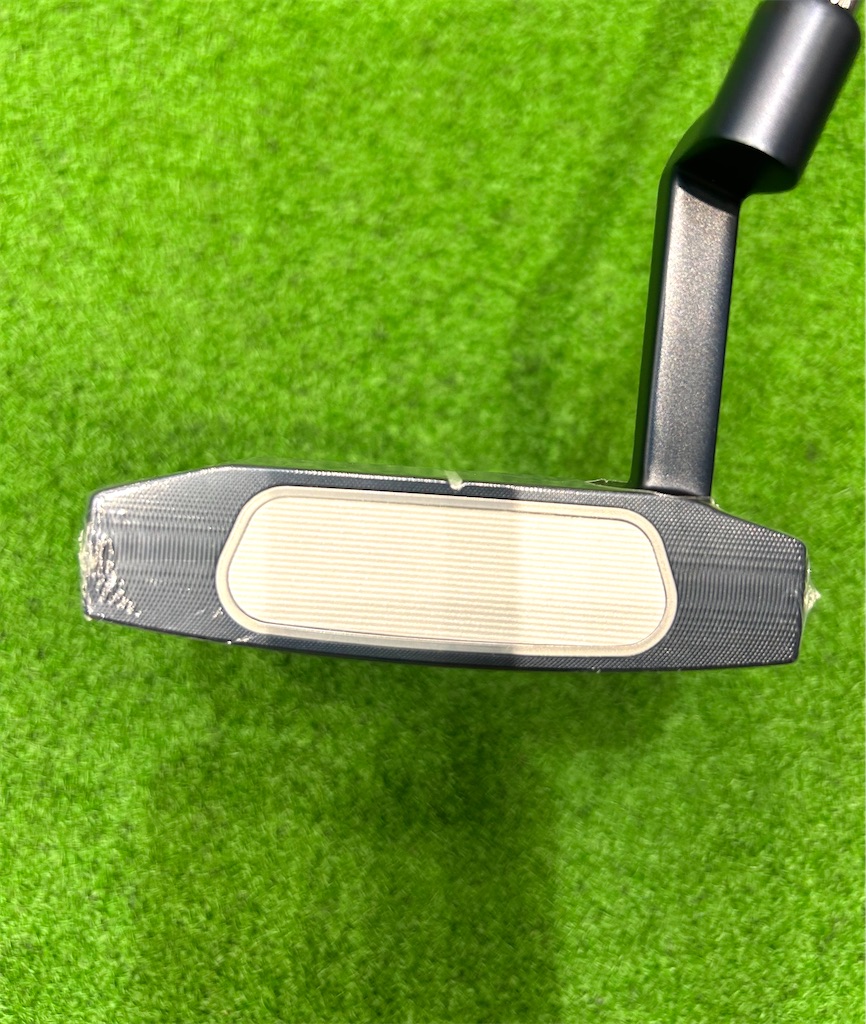
Callaway's drivers have the advantage of being able to hit a stable trajectory with an appropriate amount of spin so that the distance does not drop even if the hitting point is shifted by the AI design, but finally AI has been installed in the face of the putter.
If you make a mistake with a normal putter, the ball speed will drop and you will likely make a mistake that you cannot hit the target distance, but the AI-ONE putter has the advantage of being able to hit a stable distance even if the hitting point is off.
When I actually hit it, I felt that the ball rolled well even with a small swing, and it was easy to adjust the distance.
On the course, if the impact is weak, you may come up short, but the AI-ONE putter eliminates such mistakes and makes the ball roll better.
If anything, it may be a putter that is effective on slower greens.
Composite aluminum and resin inserts
The inserts of the AI-ONE putter look the same as the white hot inserts, but the inserts are a mix of aluminum and resin, giving it a unique feel.
While the original White Hot Insert has a soft feel comparable to a golf ball cover, the AI-ONE insert has a firm, slightly flipping feel.
I thought that the inserts, which were neither too hard nor too soft, would help me with a good rolling stroke.
AI-ONE Rossie S
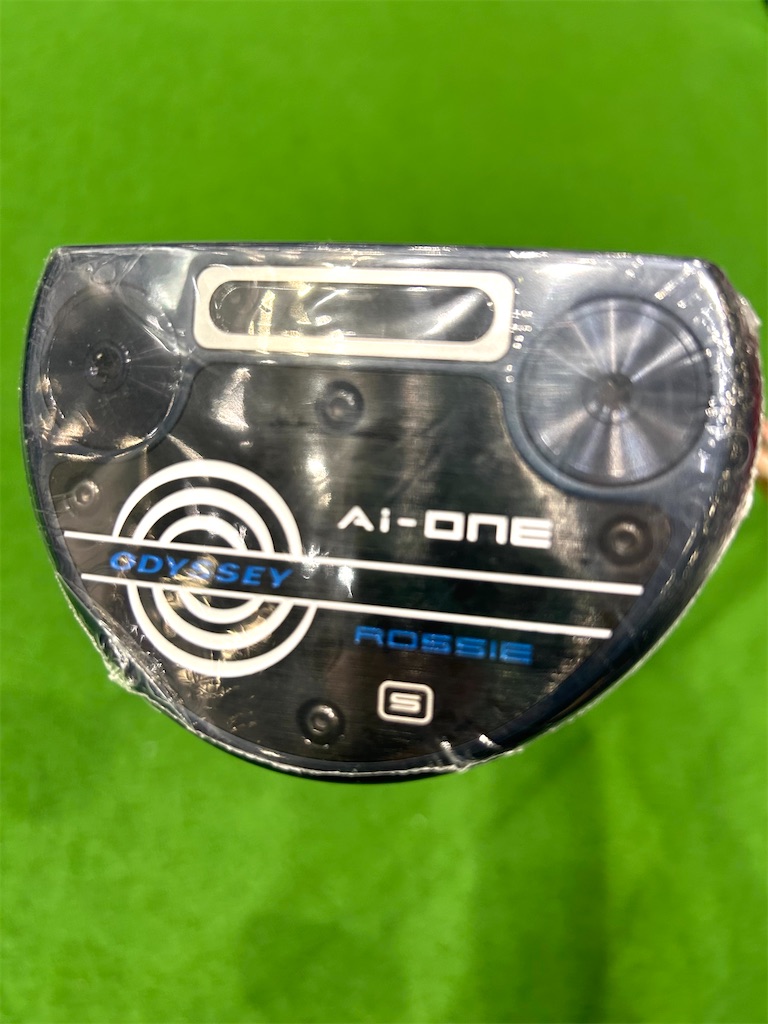
The Odyssey Rossie S is available in a variety of models, but this is the first model to feature an AI face.
The Rossie S is a model used by Jon Rahm, and it is a putter with a highly forgiving mallet with a short slant neck to improve operability.
When I actually hit it, it was easy to move the head directly because the neck was short, and I felt that it was easy to operate because it was not a mallet.
Personally, I usually use a mid-vent face-balanced putter, so I found it easier to hook to the left with a short slant neck.
For users who usually use a crank neck putter, I think that a short slant neck that can be hit with the same feeling can be used without discomfort.
White Hot OG Rossie

The Odyssey 20th Anniversary model Rossie is a mid-vent neck that makes it easy to hit straight.
The mid-vent neck is harder to roll to the left than the crank neck or short slant neck, so I think it has the advantage of being easier to hit straight for users who often get caught or miss to the left.
The mid-vent neck Rossie is recommended for users who want to make a straight stroke and hit it straight, or for those who want to stroke with less opening and closing of the face.
Rossie's white hot inserts have a softer feel, but the AI face has a slightly stiffer feel, so I think it's a place where user preferences are divided.
Steel stroke lab shaft
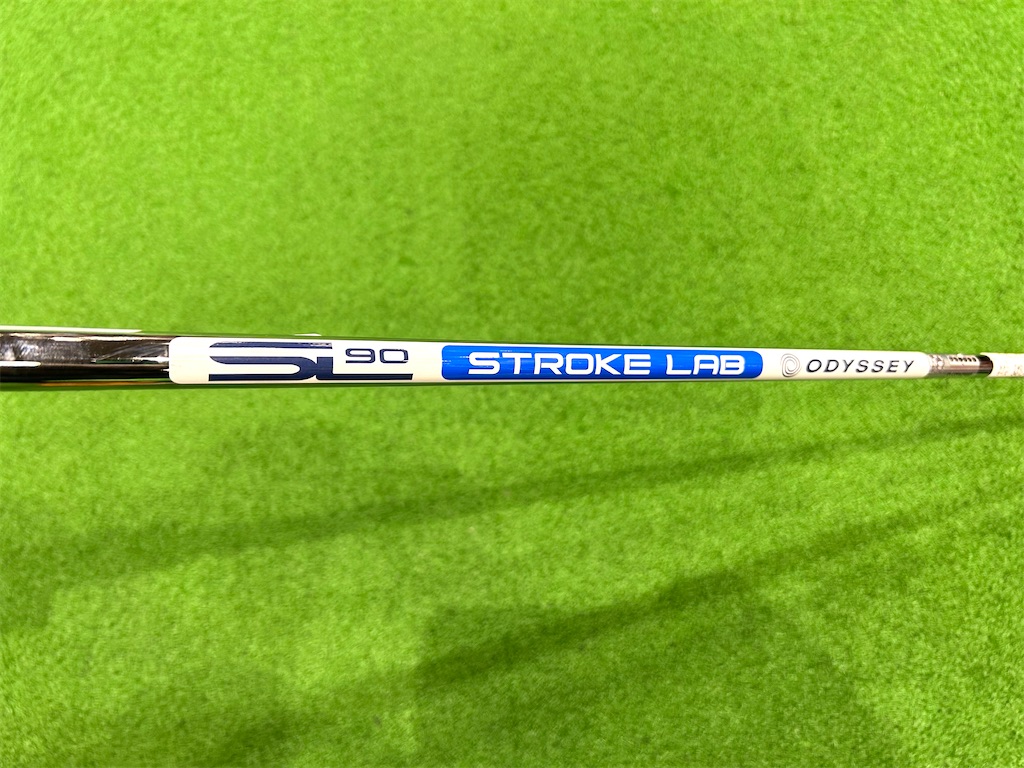
Conventional stroke lab shafts are made of a composite material of steel and carbon, which makes it easy to hit a ball that rolls well by taking advantage of the flex of the shaft.
The AI-ONE putter uses a steel shaft in the 90g range, and a counterweight is mounted inside the shaft on the hand side to increase the moment of inertia.
When I hit the AI-ONE #1 putter, I think it was because of the counterbalance that I felt stable and easy to hit for a pin-type putter.
The steel shaft of the stroke lab is slightly soft and has a loose flex, so I have the impression that the ball rolls better even with a steel shaft.
On the Japan Tour, many female professionals have put their putters into matches and become a hot topic.
Please give it a try!
